XR training is immersive, engaging, and increasingly effective.
Learners remember more, practise safely, and build confidence faster than with many traditional methods.
But strong learning outcomes don’t come from immersion alone. They come from interaction — with a coach, a peer, or someone who can help learners make sense of what they’re doing as they do it.
In real-world training, this is taken for granted. In XR, it’s often designed out.
When XR training brings real-time support back into the experience, learning feels more natural, progresses more smoothly, and sticks for longer.
In the Real World, Learning Is Collaborative by Default
Think about how people are actually trained in real environments.
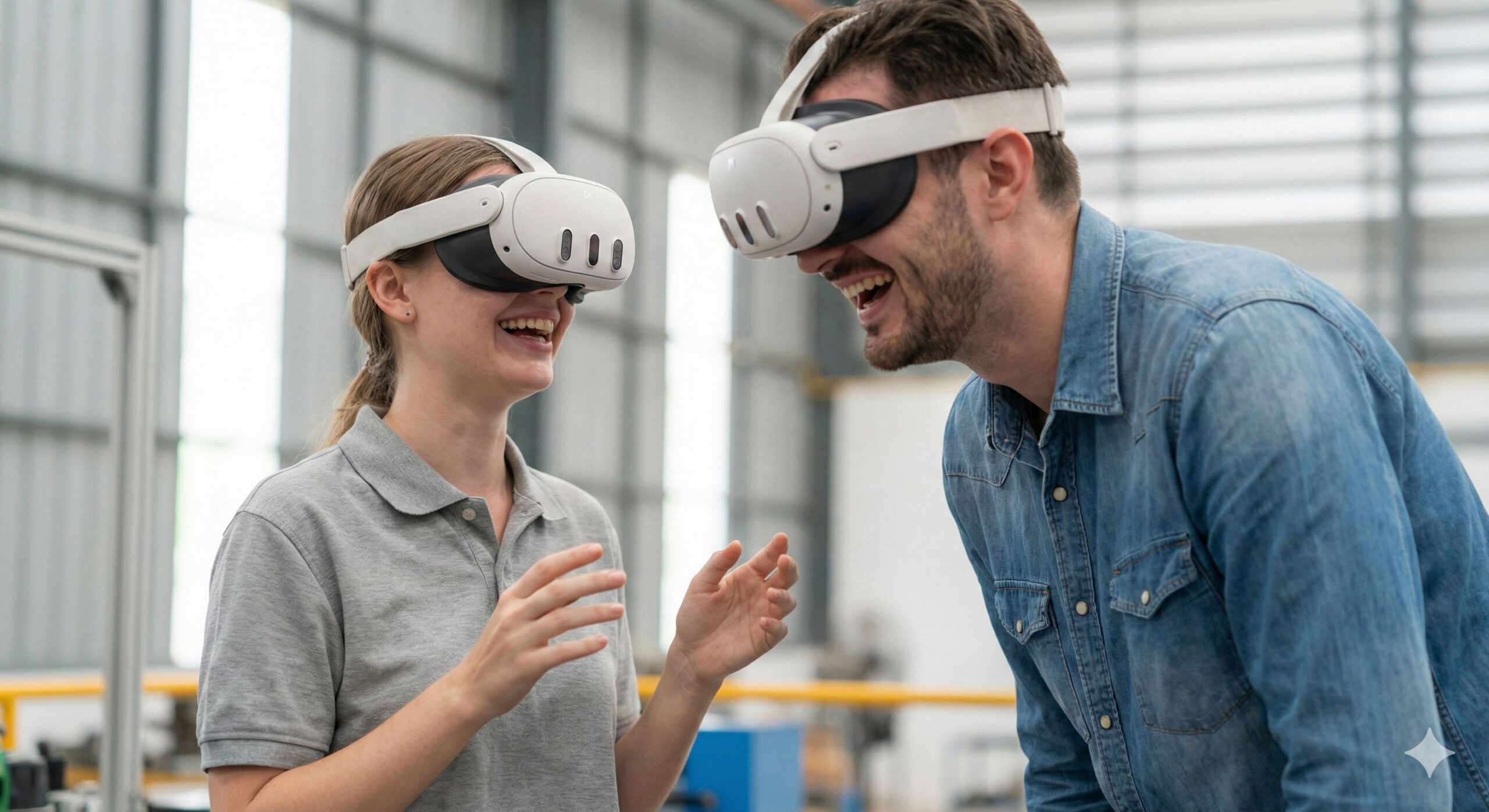
An apprentice works alongside someone more experienced. A trainee asks questions as they go. A coach gives feedback in the moment. Peers compare notes, watch each other, pick things up from one another. Even in structured classroom or on-the-job settings, learning is rarely silent or isolated. Conversation, guidance, and shared experience are part of how understanding forms.
These interactions don’t just prevent mistakes. They help learners connect actions to outcomes, build confidence, and develop judgement — the things that make skills transferable beyond the training environment.
XR training doesn’t change how humans learn. It just changes the room they’re learning in.
What Changes When Learners Are Isolated in XR
XR environments are powerful, but they can also be lonely.
Once the headset goes on, a lot of the small interactions learners rely on disappear. There’s no quick check-in with a trainer. No quiet question to a peer. No chance to talk through uncertainty out loud.
When that happens, learners aren’t failing — they’re just missing the normal back-and-forth that helps understanding settle. They struggle quietly with uncertainty. They spend mental energy trying to figure out what’s expected instead of actually learning. They move forward without fully understanding why something worked. They finish a session having “completed” it, but without real confidence in what they did.
In real-world training, these moments get resolved through conversation. In XR, they pass unnoticed.
Why Real-Time Support Changes the Feel of a Session
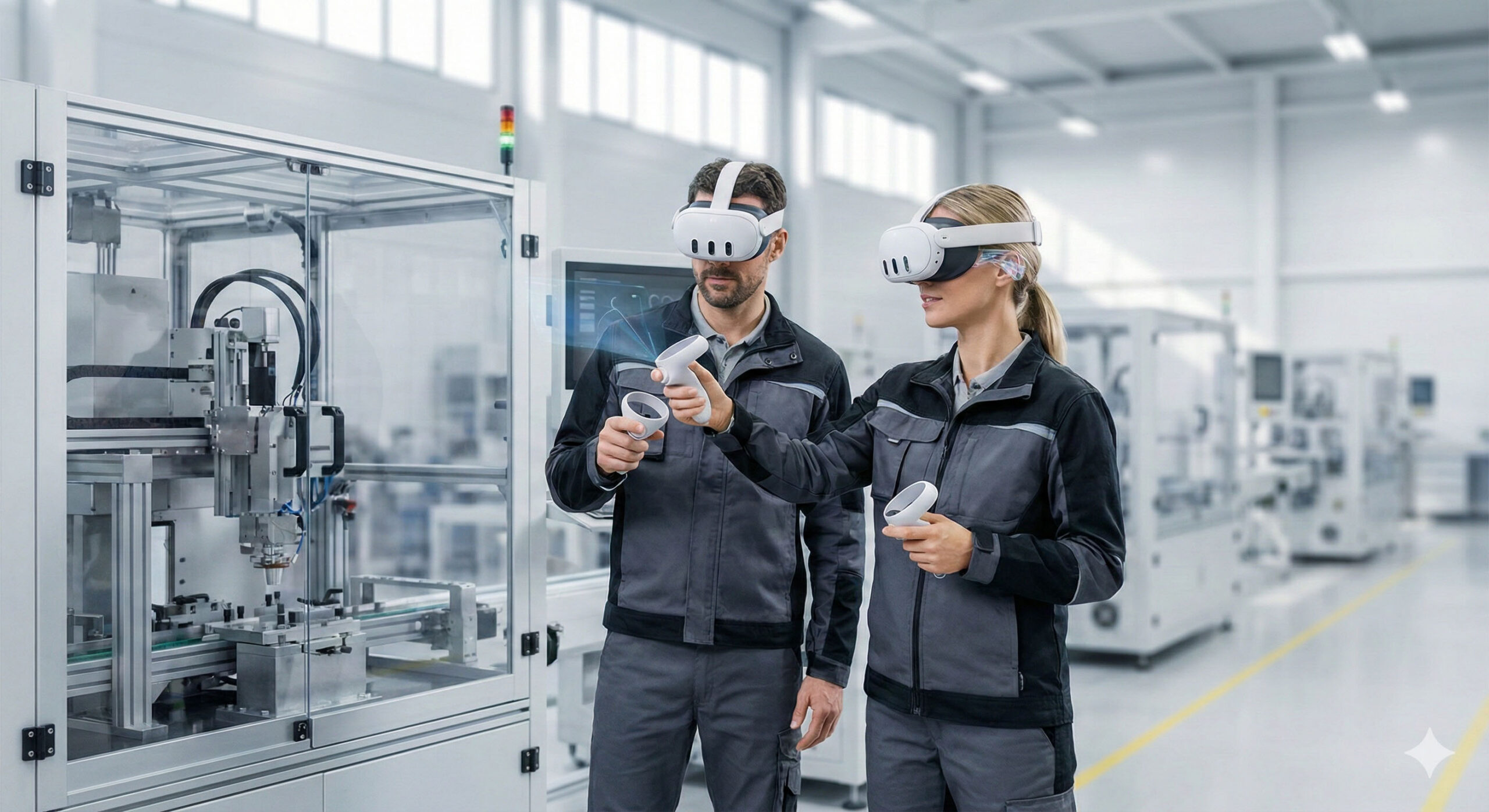
One of the biggest benefits of real-time support is something that doesn’t show up in a report: how the session feels to the learner.
When learners know they can ask a question, talk something through, or get a nudge if they’re going wrong, the whole experience relaxes. They’re not worried about making a mistake in silence or missing something they can’t ask about.
That shift matters. Learners take their time instead of rushing. They explore more carefully. They engage more deeply with what they’re doing. Confidence builds alongside competence, rather than only showing up after the fact in a score.
This isn’t about someone standing over their shoulder correcting errors. It’s about recreating the conditions that make real-world learning work: shared understanding, reassurance, and the feeling that someone’s got your back.
How This Actually Improves Outcomes
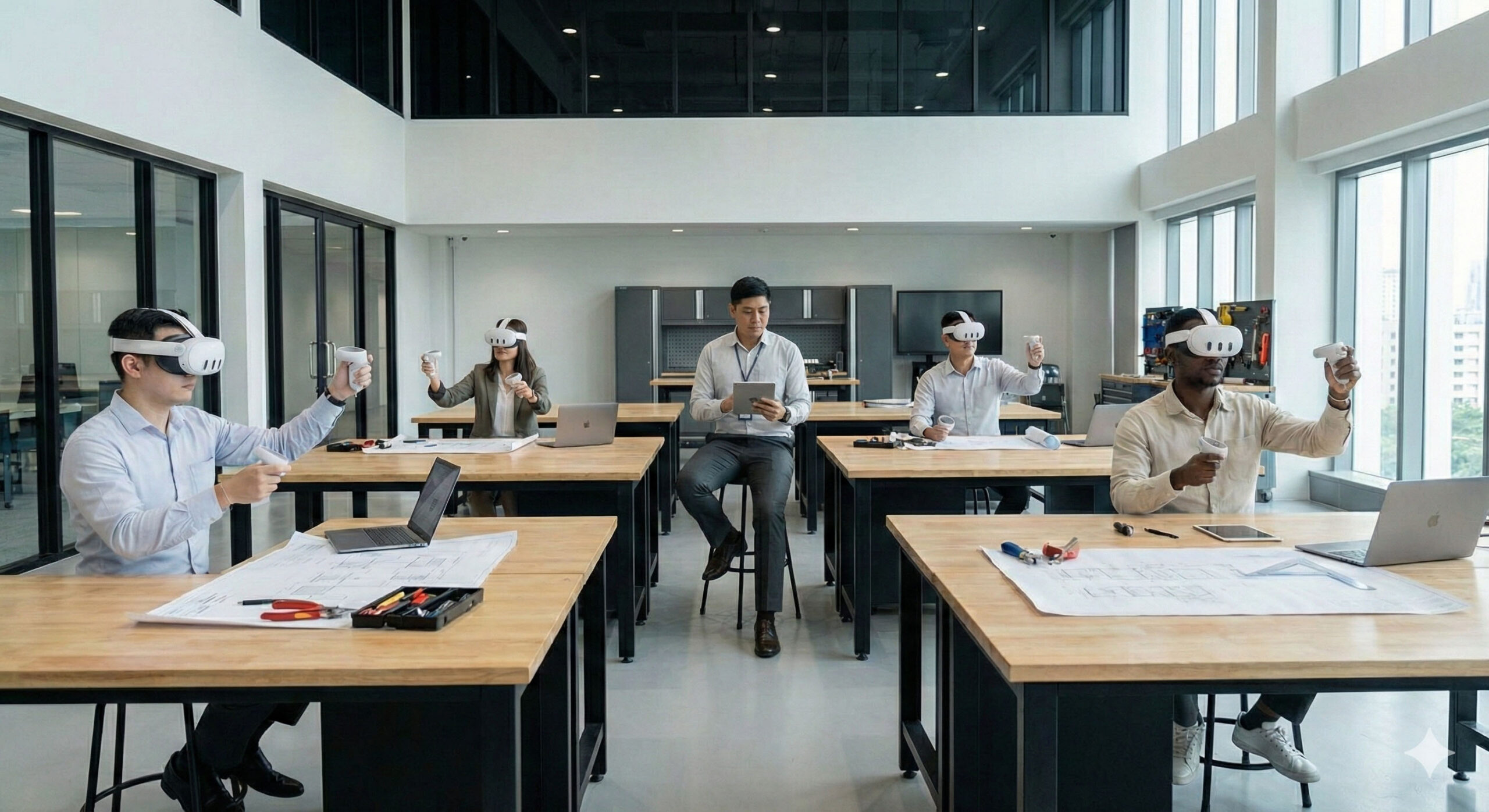
The improvement in outcomes comes from how people process information, not just from catching mistakes.
Learning through sense-making, not just repetition. When learners can talk through what they’re doing — with a coach, a trainer, even a peer — they move from doing to understanding. Actions get connected to reasons. Decisions get explained, not just repeated. This is what allows learning to transfer back to real work rather than staying locked inside the training scenario.
Reinforcement happens when it counts. In real-world training, good judgement gets reinforced as it happens. “That’s exactly why you do it this way.” “Notice what changed when you adjusted that.” Real-time support allows the same thing in XR. Learners don’t have to wait until the end of a session to find out whether they were on the right track.
Less mental friction. XR environments are cognitively demanding. Learners are processing visuals, instructions, controls, and objectives all at once. Being able to ask a question or hear a bit of reassurance takes unnecessary load off. They spend less time second-guessing and more time actually focusing on the task. That alone makes a noticeable difference.
Collaboration Helps Learning Stick
Learning sticks better when it’s shared. This isn’t a slogan — it’s just how memory works.
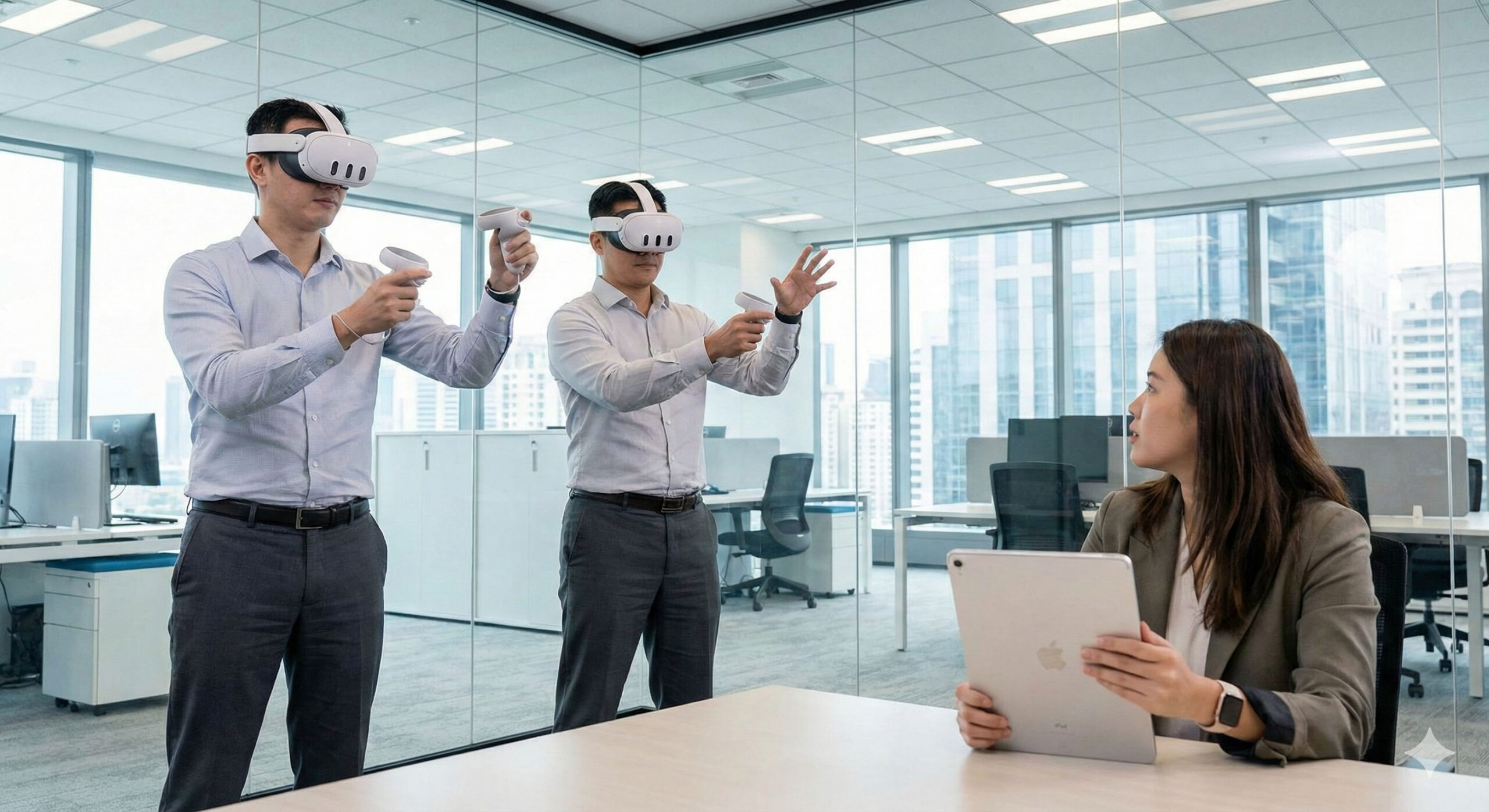
Talking through experiences helps learners organise what they’ve done into something they can remember and apply later. Explaining a task to someone else reinforces your own understanding. Hearing how others approached the same challenge gives you more to draw on next time.
In team-based or enterprise training, this matters even more. Shared learning leads to shared standards, shared language, and shared confidence. Training becomes something the group owns, not just something individuals tick off a list.
XR training that supports communication mirrors how teams actually learn and work in the real world. Training that doesn’t is leaving a lot on the table.
Smoother Paths, Better Outcomes
When XR training includes real-time support and communication, the learning journey itself gets easier — not because the content is dumbed down, but because unnecessary friction is removed.
Sessions flow more naturally. Learners move forward with confidence rather than hesitation. Fewer people get stuck or quietly disengage. Outcomes become more consistent across different learners, sites, and cohorts.
For enterprise teams, this shows up where it actually matters: stronger performance back on the job, not just better-looking completion numbers.
What This Looks Like in Practice
Real-time support doesn’t mean constant interruption or micromanagement. Nobody wants that, and it would undermine the whole point.
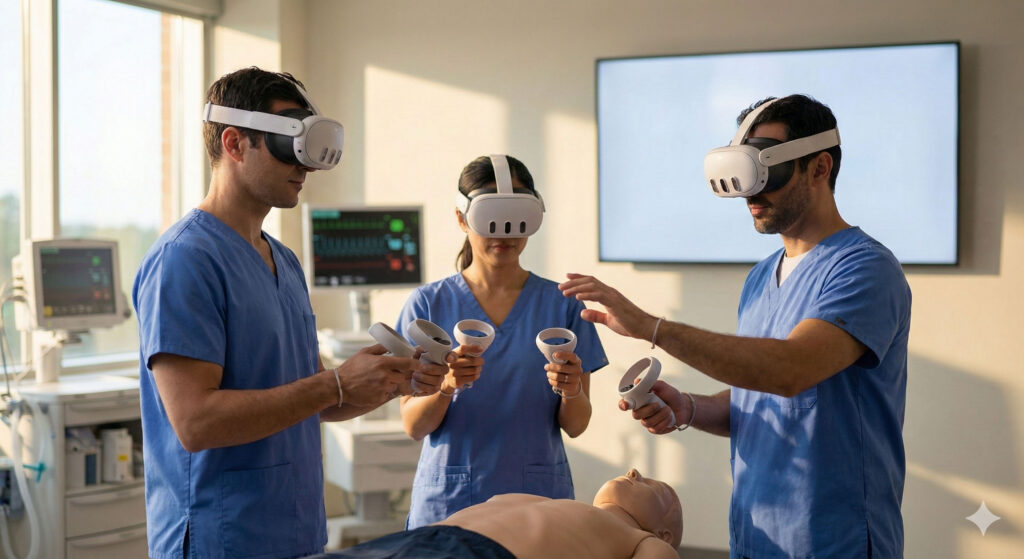
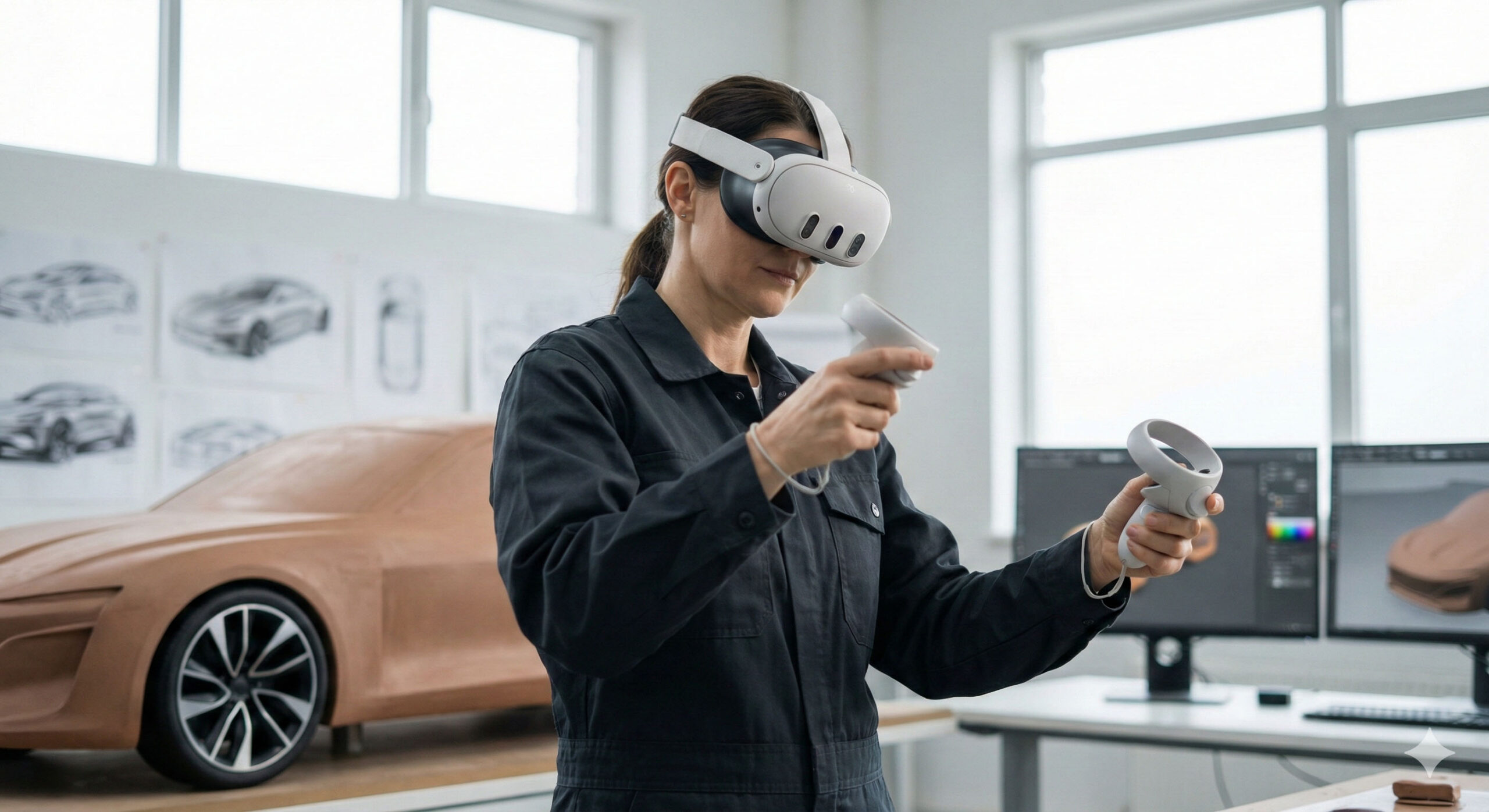
In practice, it’s trainers observing sessions and offering guidance when it’s genuinely useful. It’s learners asking questions mid-task rather than bottling up confusion for later. It’s coaches talking through key decisions or moments of uncertainty. It’s multiple learners being supported without breaking immersion — and training that feels connected to real people, not just a system running through a script.
The defining feature is simple: communication is there when it matters.
Designing XR Training to Match How People Actually Learn
The most effective XR training doesn’t try to turn learning into a solo experience. It recognises that guidance, conversation, and shared understanding are part of how skills develop — and always have been.
Real-time support brings XR training closer to real-world training, not further from it. It lets coaches, trainers, and peers play the same role they always have, just inside an immersive environment.
From Immersive Experiences to Real Learning
Immersion is a powerful starting point. But it’s not the finish line.
What makes learning last is interaction — the chance to ask, explain, reflect, and adjust while it’s still fresh. That’s how people have always learned. XR training works best when it respects that instead of working around it.
When learners aren’t left alone in the headset, XR stops being just an experience and starts being effective training — the kind that carries through into real work and real decisions.